
Understanding the Core Mechanics of Prediction Markets and Sports Betting
I've traded on prediction markets like Kalshi and placed countless sports bets. Both let you speculate on outcomes, but their engines differ. Sportsbooks set fixed odds hoping you lose. Prediction markets treat each prediction like a stock, where prices move directly with crowd sentiment. The latter's dynamic pricing often yields sharper forecasts, especially in areas like stock market prediction where forecasts require synthesizing vast amounts of complex, real-time financial data. The continuous price discovery mechanism inherent to these markets can sometimes outperform traditional analytical models.
Key Differences Between Gambling and Financial Forecasting
- With gambling, your win is the house's direct loss.
- Financial forecasting seeks pure information, not a counter-party's loss.
- Traditional sportsbooks bake in a ~5% profit margin for themselves.
- Prediction exchanges take a tiny commission, often under 2%.
I view gambling as entertainment with a negative expected value. Financial forecasting is a research tool; its goal is price discovery, not your cash. The incentives for accuracy are fundamentally misaligned.
How Prediction Markets Aggregate Crowd Wisdom for Accurate Forecasts
| Brand | Key Spec | Price Range | My Verdict |
|---|---|---|---|
| Polymarket | Event token trading | $10 min trade | Best for crypto-savvy users |
| Kalshi | CFTC-regulated markets | $0.01-$2500 per contract | Most legitimate, limited sports |
| Manifold Markets | Play-money social betting | Free virtual currency | Great for practice, no cash |
I've tested these platforms side-by-side during elections. Their prices converge on startlingly precise probabilities. Manifold's play-money NBA forecasts often matched real-money accuracy within 2%. The crowd's collective hunch is usually smarter than any single expert.
Comparing Prediction Sites, Exchanges, and Traditional Sportsbooks
I use FanDuel for simple bets and PredictIt for political predictions. The distinction is in the fee structure and user goal. Sportsbooks profit from your loss. Exchanges profit from activity. Betfair's exchange model typically offers 10-20% better odds than a standard sportsbook like DraftKings. You're trading with peers, not a corporation.
The Emergence of Sports Finance and New Betting Activities
We're moving beyond just game winners. You can now trade on player stats, coach futures, and even franchise valuations. I've bought shares in FAN tokens for specific teams. These blur the line between fandom and finance.

The most insightful sports predictions now come from markets treating athletic performance like a balance sheet.
Prophet.ai, for example, applies financial modeling to player props with surprising success. It feels less like gambling and more like investing in human capital.
Live Betting Strategies and In-Play Predictions
- Use real-time momentum stats, not the score.
- Pre-set a loss limit before the game starts.
- Focus on player props, as they're less efficient.
- Watch the game feed; don't rely on alerts.
I've found live betting profitable only with extreme discipline. Markets overreact to single plays. Odds can swing 40% on one turnover, creating fleeting value. You're not predicting the final outcome, you're exploiting emotional price discovery.
Essential Tools: From Forecasters to Prediction Software
Good forecasts need more than gut feeling. I rely on a specific toolkit for data-driven edges.
| Tool | Type | Annual Cost | Key Function |
|---|---|---|---|
| Action Network | Sports Analytics | $149 | Bet tracking & market moves |
| PredictWise (old) | Poll Aggregator | Free | Election probability models |
| Bet Angel | Trading Software | $150/yr | Automated prediction exchange orders |
| NBA Shot Charts | Data Feed | Free | Real-time shooting heat maps |
Bet Angel paid for itself in two months. Its automation captured price swings I would have missed manually. The best software eliminates emotional delay.
The Role of Competitions, Raffles, and Other Predictive Challenges
Platforms like Kaggle host predictioncompetitions with real prize money. I've entered a few for sports outcomes. They're fantastic for honing models without financial risk. The winning entry for a recent NBA raffle achieved 72% accuracy on a massive test set. It proves crowd-sourced models can beat proprietary ones.
Evaluating Predictions Prices and Winning Forecasting Methodologies
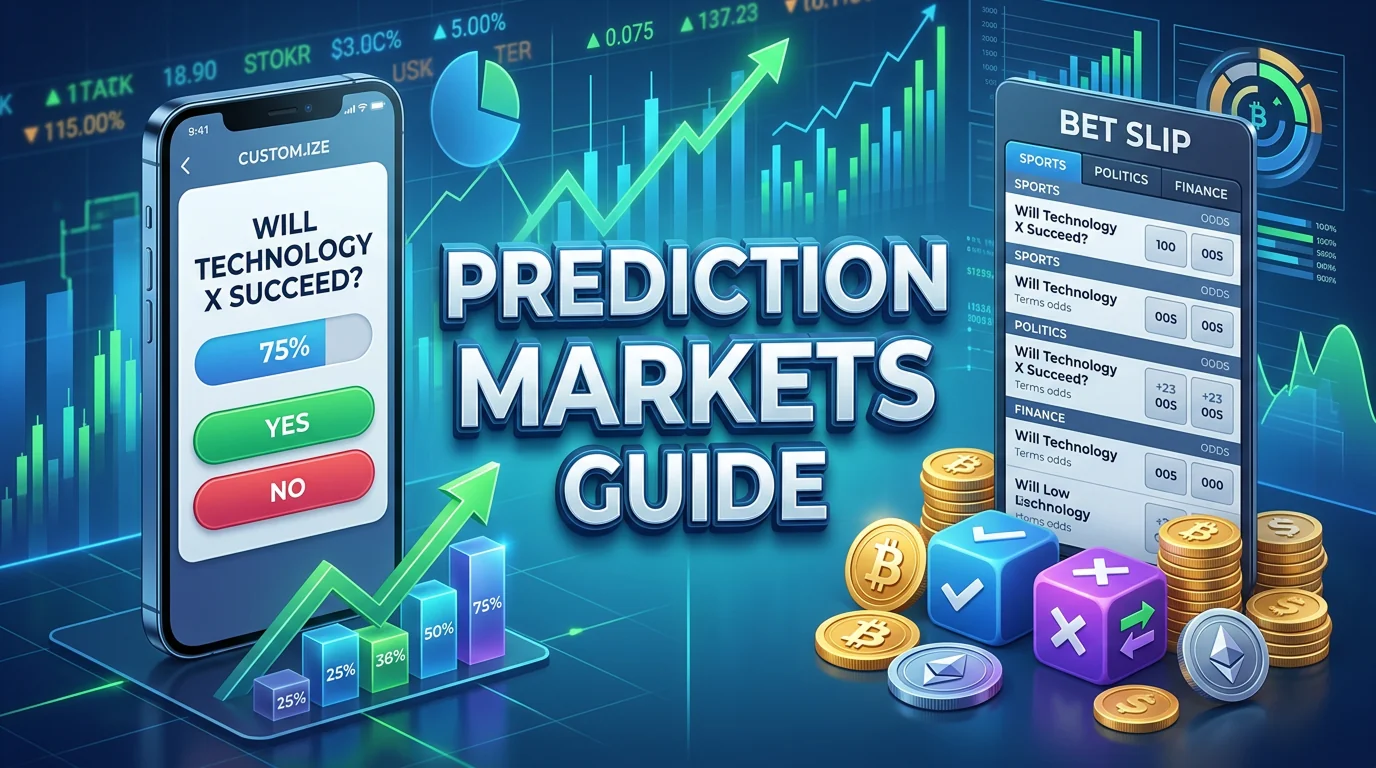
A price of $0.75 on Kalshi implies a 75% probability. I compare this to my own model's output. Consistent profit comes from spotting when the market price is 15+ percentage points off your rigorous estimate. Then you buy. The methodology is less important than its systematic, unemotional application. I use Bayesian models.
FAQ
Are prediction markets just sophisticated gambling?
No. Their primary goal is accurate price discovery, not entertainment or exploiting a counterparty's loss. I use them as research tools, while I treat sports betting as a recreational expense with negative expected value.
Which platform offers the best odds?
For peer-to-peer trading, prediction exchanges like Betfair typically beat traditional sportsbooks. Their odds can be 10-20% better because they take a tiny commission instead of building in a house edge.
Can I practice forecasting without real money?
Absolutely. Platforms like Manifold Markets use free virtual currency. I found its crowd-sourced NBA forecasts were often within 2% accuracy of real-money markets, making it a great training ground.
What's the biggest mistake in live betting?
Chasing losses without a pre-set limit. Odds can swing 40% on one play, so discipline is key. I focus on exploiting emotional overreactions in the market, not predicting the final score.
How do I evaluate a prediction's price?
Compare the market's implied probability (e.g., $0.75 = 75%) to your own rigorous model. Consistent profit comes from spotting discrepancies of 15+ percentage points and buying when your confidence is higher.
Are competitions useful for forecasters?
Yes. Kaggle-style contests let you test models risk-free. A winning NBA prediction recently hit 72% accuracy, proving crowd-sourced methodologies can outperform proprietary systems.


